Blog

Why Orchestration and Optimisation Are the New Engines of Airline Resilience

Blog Fuel Fares Fragility 2

The global airline industry is once again facing turbulence. As conflict continues in the Middle East, more than $50 billion in market value has been wiped off major carriers. Soaring jet fuel prices, restricted flight paths, and shifting demand patterns are pushing airlines into yet another high-stress operating environment – a familiar but unwelcome scenario for an industry that has only recently begun to stabilise after the pandemic.

At moments like this, when external shocks ripple across balance sheets, the question becomes: how can airlines protect profitability when so many variables are beyond their control?

One critical – and often overlooked – answer lies in the power of orchestration and optimisation: two capabilities that turn complexity into agility and volatility into opportunity.

The Fragility Beneath the Surface


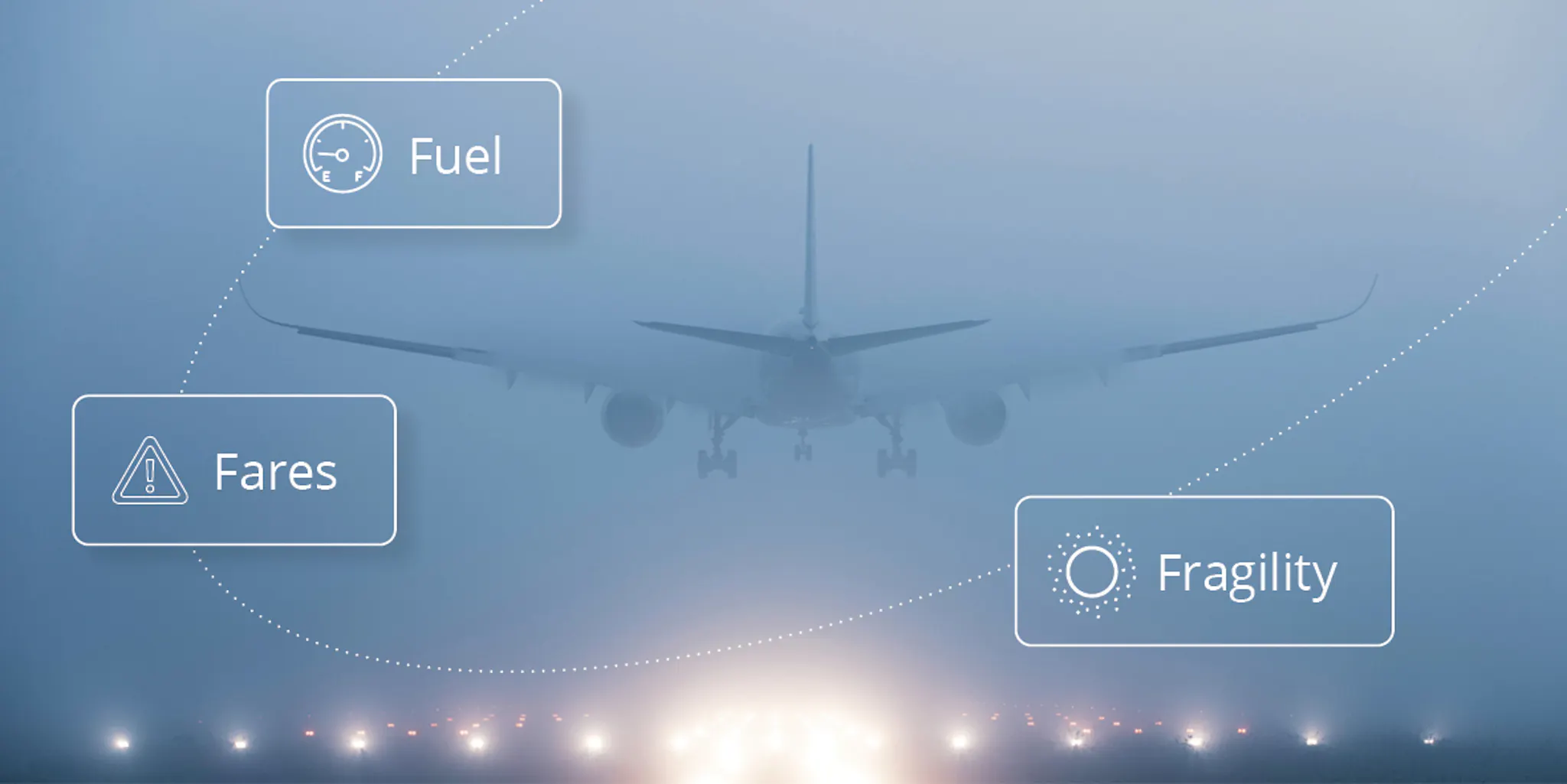
Airlines have long operated on razor-thin margins. When a single external factor – such as the price of fuel, which can account for up to 30% of an airline’s operating expenses – suddenly doubles, the entire financial model comes under pressure. To offset those increases, many carriers raise fares, trim routes, or delay fleet investments. But these measures only address the symptoms, not the structural issue.

The real vulnerability lies in fragmentation. Most airlines operate across dozens of markets, supported by legacy infrastructure, multiple acquirers, and regional distribution systems that don’t talk to each other. As a result, when disruption hits, decisions are slow, optimisations are manual, and cost efficiencies are hard to capture in real time.

That’s where orchestration changes the game.

Orchestration: Connecting the Disconnected


At its core, orchestration is about integration and intelligence. It unifies fragmented systems – from payment gateways and acquirers to digital channels and loyalty platforms – into a single, cohesive layer. In practice, that means every transaction, every route, and every payment method can be intelligently managed and optimized in real time.

For airlines, this connectivity enables flexibility and control in ways that legacy systems cannot. For example:

  • When costs rise in one region, orchestration allows airlines to dynamically re-route payment traffic to acquirers offering the best interchange rates or higher approval rates.
  • When consumer preferences shift, it allows rapid rollout of local payment methods without lengthy integrations.
  • When fraud activity spikes or refunds surge, orchestration enables automated responses that protect margins and customer trust.

In short, orchestration empowers airlines to move from reactive to proactive – not just keeping systems running, but continuously fine-tuning them to perform optimally, regardless of market conditions.

Blog analyze

Optimisation: The Continuous Edge


Orchestration lays the foundation, but optimisation brings it to life. Optimisation is about using data to continually refine how payments are routed, how conversions are improved, and how costs are reduced.

For instance, by analysing transaction data across all routes and acquirers, an orchestrated platform can automatically route each payment through the acquirer most likely to approve it at the lowest cost – improving acceptance rates and eliminating unnecessary fees. When executed at scale, these micro-optimisations translate into millions of dollars in annual savings.

And when fuel prices spike, as they are now, those savings are not marginal – they’re essential. Every percentage point saved in payment costs or fraud losses can directly offset rising operational expenses elsewhere in the business.

Optimisation also extends beyond payments. It means using real-time data to identify underperforming digital channels, optimise customer conversion flows, or rebalance global inventory distribution. These capabilities turn orchestration from a technical function into a strategic asset – one that drives efficiency, resilience and profitability.

Resilience Built on Agility


Resilience is built on agility. The airlines that emerge strongest from disruption are those that can make fast, data-driven decisions and implement them globally without friction.

That’s what orchestration delivers. It’s a digital nervous system that allows airlines to sense, decide and act – instantly and intelligently. It eliminates dependency on manual processes and fragmented payments infrastructure, turning complexity into control.

Where other carriers face delays in adapting to economic shocks, orchestrated airlines adjust payment routing, distribution and customer experience in hours, not months. They use optimisation not as a cost-saving tool, but as a resilience strategy.

From Surviving to Thriving


The lesson of the present moment is clear: macroeconomic volatility is no longer an exception; it’s the new operating environment. Airlines can’t influence fuel markets or geopolitical events – but they can control how effectively their digital ecosystems respond.

By embracing orchestration and continuous optimisation, airlines don’t just weather the storm – they harness it. They turn payments from a cost center into a source of competitive advantage and position their digital operations to flex with every market shift.

The future of airline profitability will belong to those who master orchestration – not only in payments, but across the entire customer journey. In a world where change is the only constant, the true measure of success will be the ability to optimise, always.

Orchestration isn’t just a technical solution. It’s a new philosophy for airline commerce – one that transforms disruption into a catalyst for smarter, stronger, more sustainable growth.